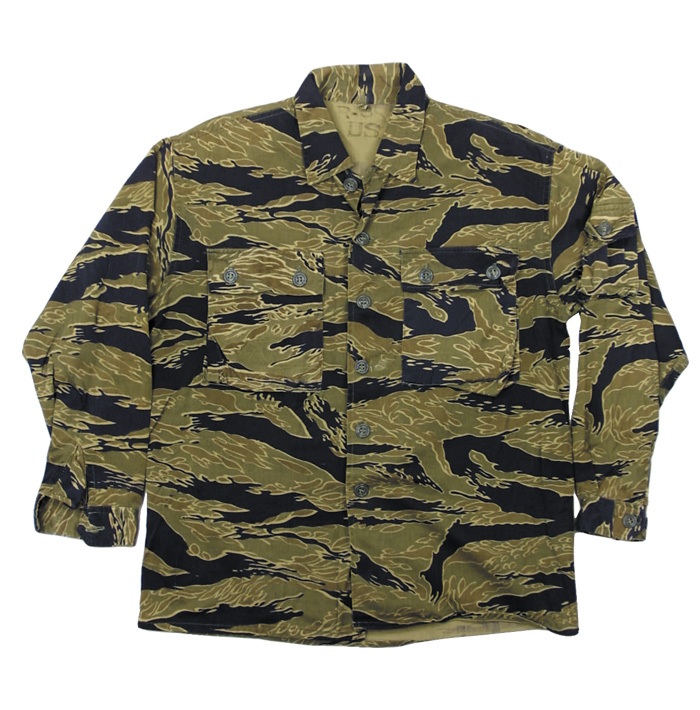
Although it is possible to infer to some extent which country the produsing was done from the materials, method, specifications, etc., such as the thread used, I would like to focus here on tiger camo patterns printed in Japan. However, please forgive me for including some speculation, imagination, and dogma.
As many of my predecessors have pointed out, the original Tiger model for the US military procurement was probably the Tiger First Pattern adopted by the South Vietnam Marine Corps. From a DNA perspective, there is no doubt that this pattern possesses the characteristics that are the origin of the major patterns that followed.
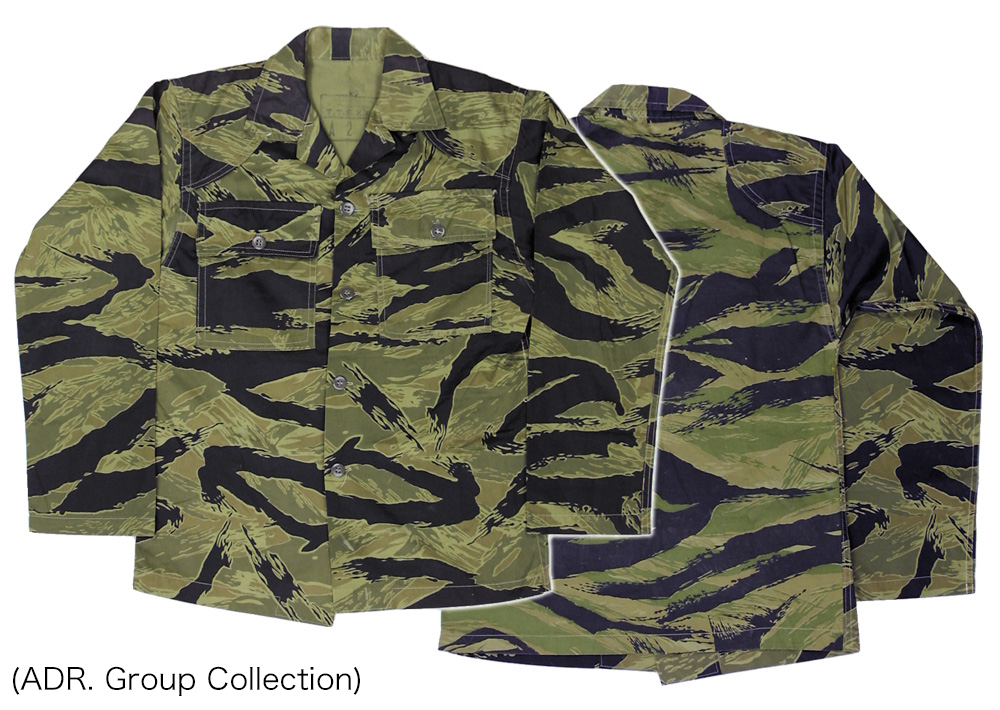
So, what was the first pattern derived from this original sample? Please refer to the photo above. I'll call it whatever I like when it comes to the pattern name, but as far as I know, this type, which I've named the "Early Pattern", first appeared in photographs from that time in 1963-64, worn by SF (Note2) and CIDG (Note1) personnel. This means that it was probably procured around 1963.
Next, in discussing derived patterns, I believe, but it is my own opinion, that the first US Tiger "Early Pattern" became the parent pattern for almost all subsequent U.S. military Tiger procurements, because it possesses even more of the originating characteristics of subsequent procurement patterns than the Tiger First Pattern adopted by the Marine Corps in South Vietnam, which served as the original model.
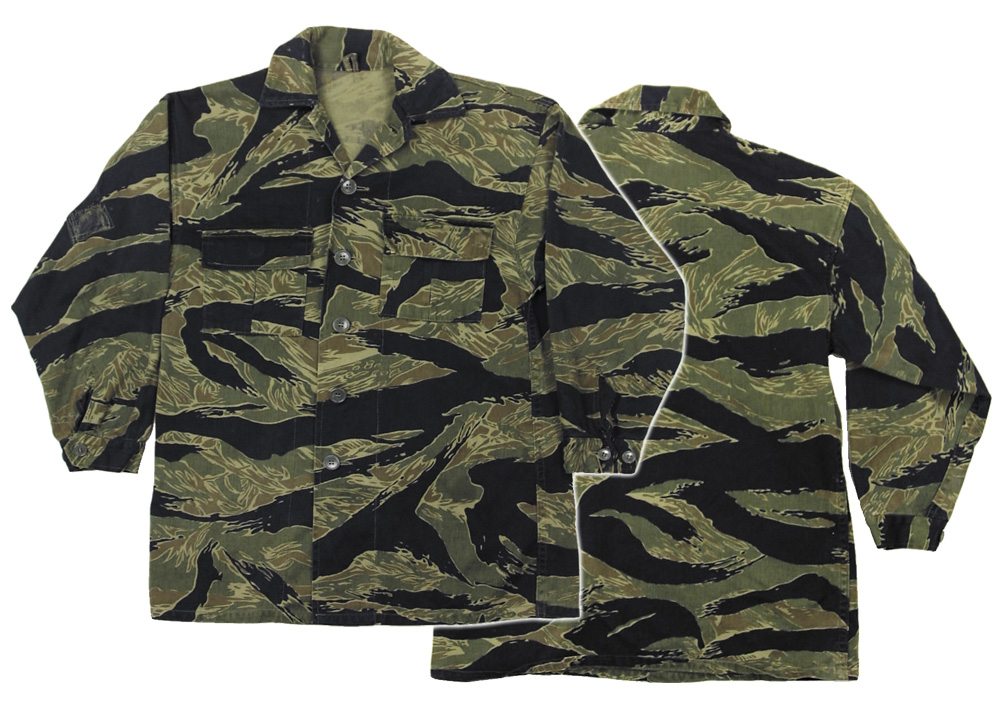
So what is the eldest pattern that was derived from the parent pattern, the "Early Pattern"? In my opinion, I would like to mention the John Wayne pattern. This pattern first appeared in photographs from that time in 1964, ahead of other patterns, and is thought to have been procured around 1964-65. Flight suits with this pattern sometimes have Okinawa labels, which suggests that in some lots the printed fabric was sourced in Japan and sewn in Okinawa.
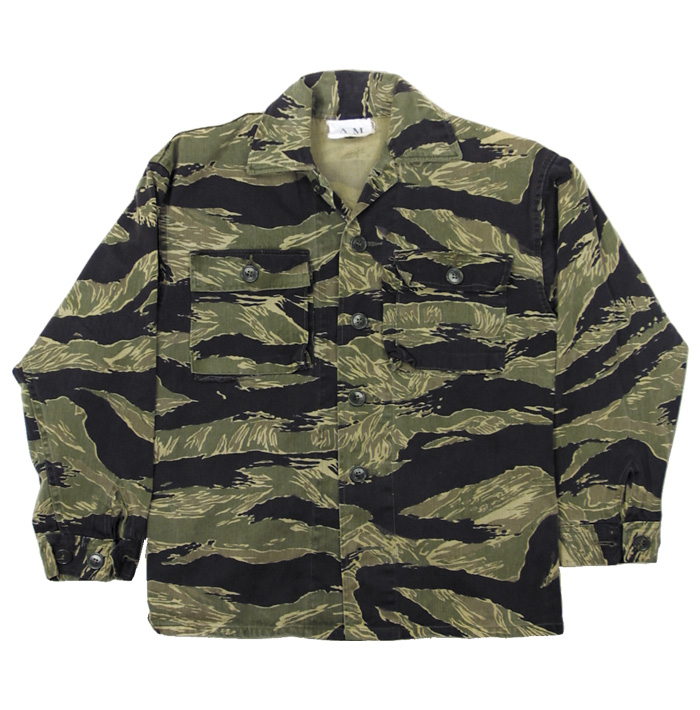
Next, what is the second pattern derived from the parent "Early Pattern" following the John Wayne pattern? It is likely the silver, which is believed to have been procured most frequently throughout the NAM campaign and is the most representative pattern of the NAM Tiger. Since it appears in photographs from around 1965, this pattern was likely first procured between 1964 and 1965. Regarding the order of procurement compared to the John Wayne pattern,, the two patterns were procured around the same time, and it is possible that the order was reversed too. The silver pattern can also be seen in photographs from the late 1960s, and there are types with clearly different colorants and tones. This suggests that the same bidder may have received multiple orders and placed repeat orders with the same printing factory, or that it may have been printed at a different factory using rollers with the same pitch.
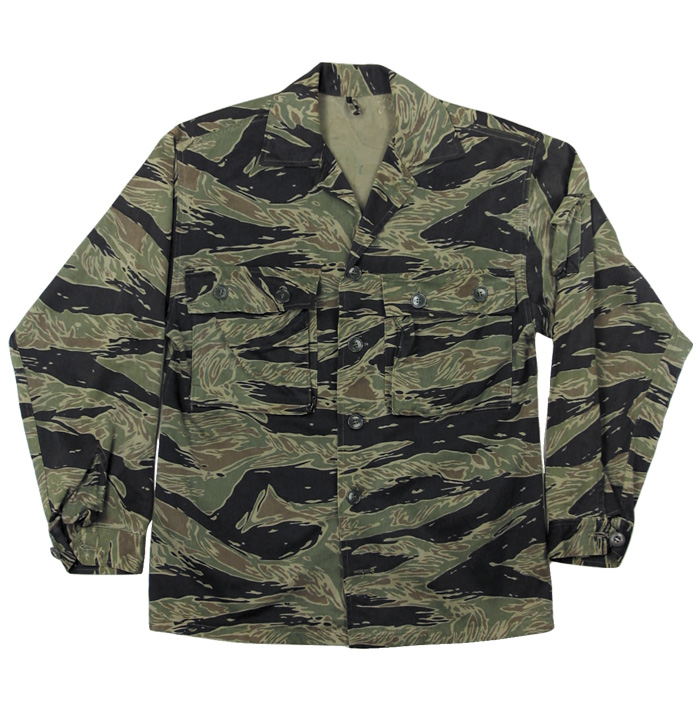
As the third son of the derivative patterns from the "Early Pattern", I would like to mention the gold tiger. It first appeared in photographs around 1967, and was probably procured around 1966. There are also types with clearly different color tones for this pattern, and it is quite possible that, like the silver, it was a repeat order. The way the other colors besides black fade to gold is reminiscent of the Tiger itself, making this a very popular pattern. Many people may know that the legendary war photographer Tim Page, aka "Crazy Child," worn the Gold Tiger oftenly at the time.
While there may have been other Tiger patterns printed and procured in Japan, these four are the only ones I can confidently say were printed in Japan. Regarding pattern development, I almost believe the U.S. military at that time lacked the ability to independently develop patterns in the Far East, including Okinawa. Even the U.S. military almost could not quickly adapt a roller-printed camouflage pattern like the Tiger. Adapting endless roller prints to the rollers and colorants used at the factory was only possible through the collaboration of the roller printers and dedicated engravers at the roller-print factory, I believe in. There's no doubt that the ERDL (leaf pattern), which the U.S. military perfected over a decade from 1948 to the early 1960s, required close cooperation from American print factory technicians.
Note1)
CIDG (Civilian Irregular Defense Group program):
This militia unit, which appears in the movie "Apocalypse Now," was formed based on the United States' irregular warfare strategy during the Vietnam War. Members were recruited from the Montagnards, an ethnic minority group living in the mountainous region of central Vietnam.
Note2) SF (US ARMY Special Forces)